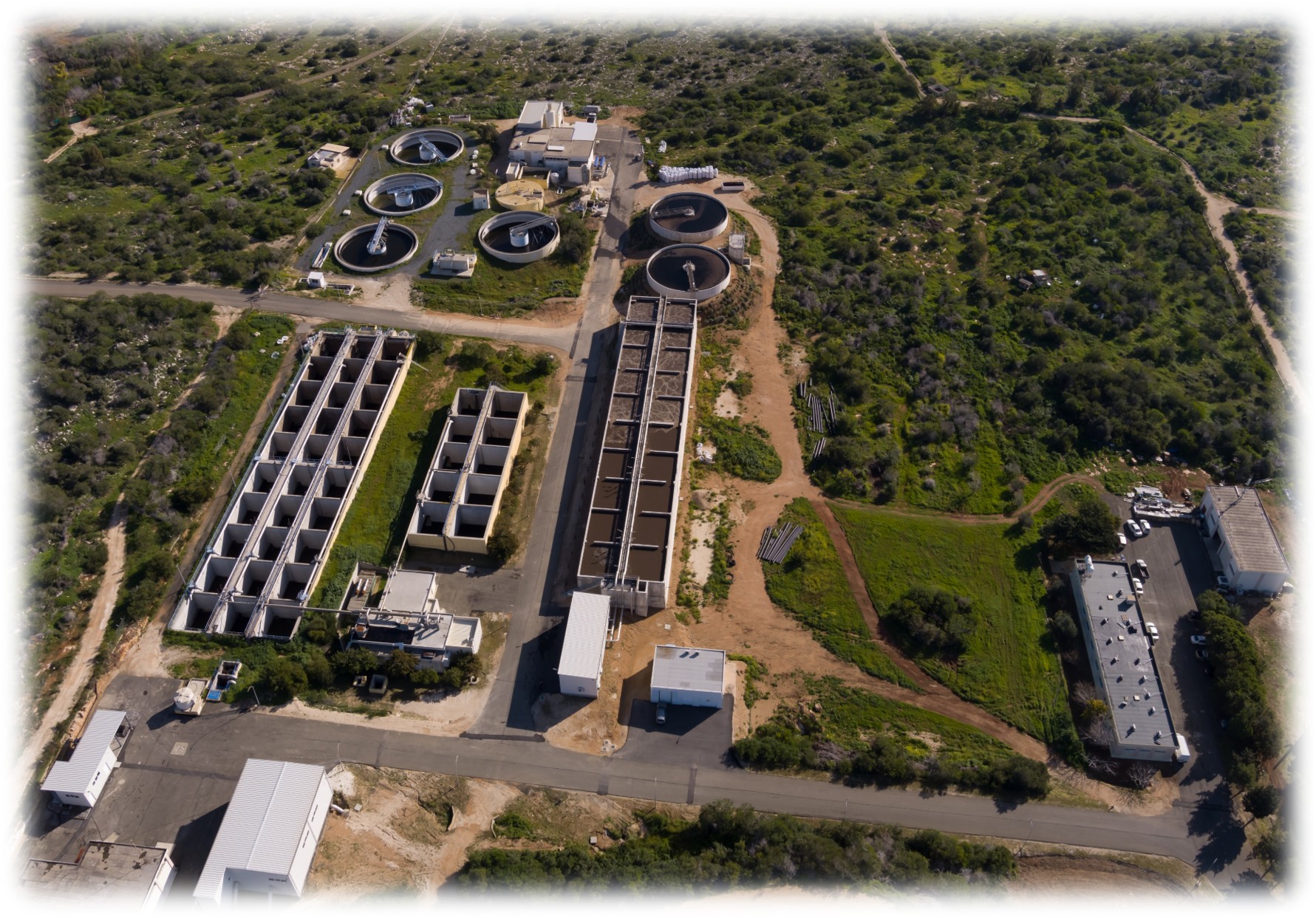
Demo Case 3 in Cyprus focuses on the large-scale reuse of treated wastewater from the Paralimni–Ayia Napa Wastewater Treatment Plant, addressing chronic water scarcity and strong seasonal water demand driven by tourism and agriculture. In a context where conventional freshwater resources are extremely limited, reclaimed water represents a strategic and, in practice, indispensable water source for the region.
The Cyprus demo highlights that reclaimed water reuse must be designed, operated, and governed as an integrated system, rather than as a stand-alone treatment facility. Overall reuse performance depends not only on effluent quality, but also on storage reservoirs and the distribution system, with a strong focus on final reuse practices, including agricultural irrigation and irrigation of green spaces. Seasonal demand variability and peak summer operation make system flexibility and energy efficiency critical factors.
Recent updates within AWARD focus on strengthening system-level monitoring, energy performance assessment, and stakeholder engagement. The monitoring framework has been upgraded to better capture parameters relevant to overall system performance, reclaimed water quality, energy efficiency, and storage operation. These include flows, storage levels, pumping operation, and energy consumption at key points of the system. This enhanced monitoring allows the reuse scheme to be evaluated holistically, linking treatment, storage, distribution, and end use.
In parallel, the demo has identified in detail the most energy-intensive processes within the treatment plant, with aeration systems and seasonal operation emerging as critical energy hotspots, particularly during periods of high demand. An ongoing study is assessing potential optimisation measures, providing a solid basis for improving energy performance and addressing energy–water interactions in large-scale reuse systems.
Stakeholder engagement remains a core pillar of the Cyprus demo. Water authorities, operators, and end users (mainly farmers) are actively involved through continuous communication and feedback loops. Monitoring results and operational insights are shared transparently, supporting trust in reclaimed water and enabling adaptive management aligned with real reuse practices.
Overall, Demo Case 3 demonstrates how reclaimed water reuse in water-scarce regions can evolve into a reliable, optimised, and stakeholder-driven system, offering transferable lessons for other regions facing similar climate and water challenges.